The Squad House
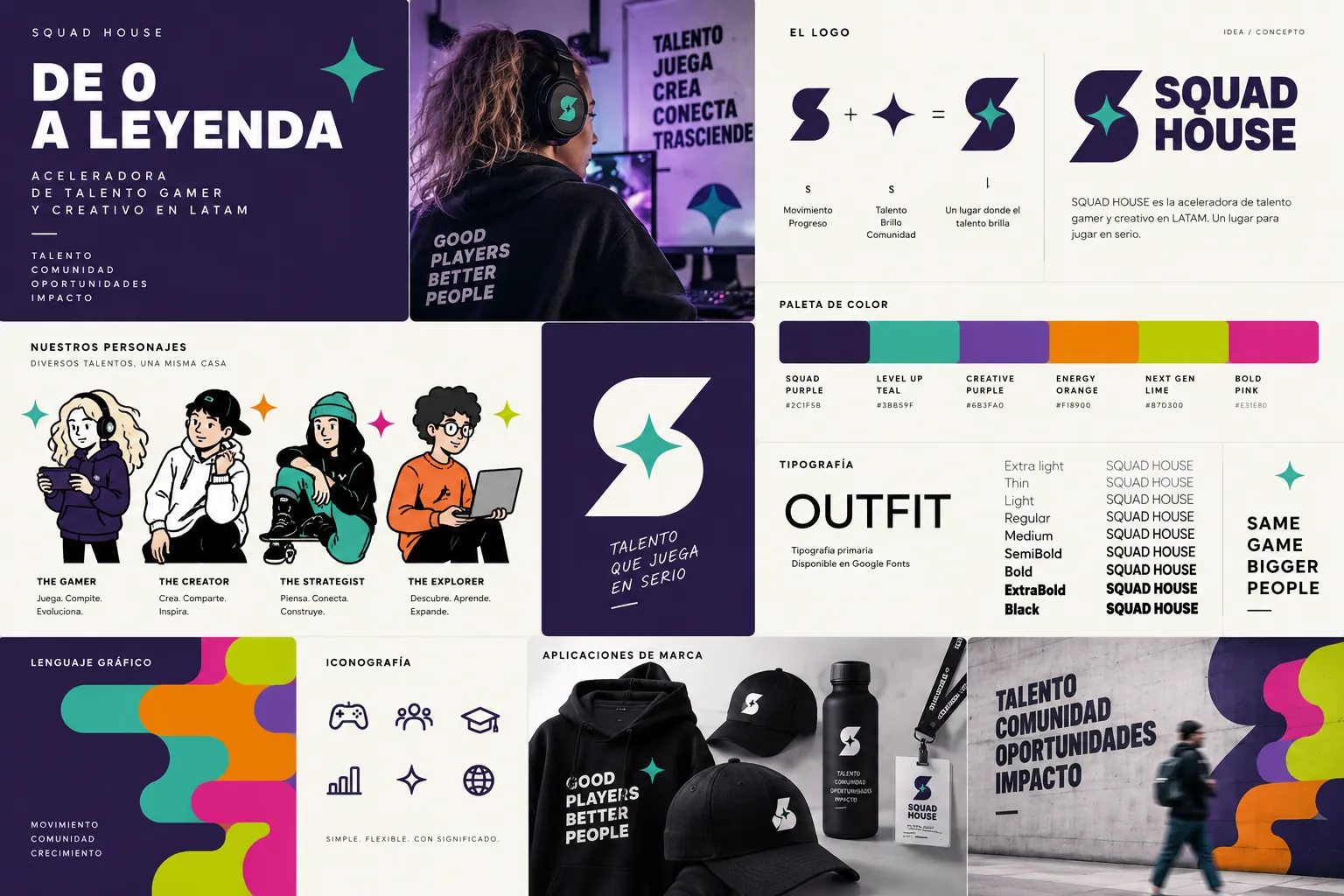
From a gaming talent base to a creative talent accelerator in LATAM. Brand strategy, business design and experience design under the transformation narrative “De 0 a Leyenda”.
What was the challenge?
The problem was not a lack of talent — it was the lack of a system capable of turning that talent into participation, growth and business value. The Squad already had a base of gaming talent, but participation in the community was almost non-existent, talent levels were uneven, campaigns lacked continuity, and there were not enough competitions, challenges or rewards to make creators want to participate consistently.
From a brand perspective, there was no defined identity, no consolidated positioning and no clearly articulated value proposition. For the agency, simply having an influencer base was not enough.
What was the idea?
The project evolved from thinking about The Squad as a talent base or influencer catalogue to thinking about it as a talent development platform: The Squad House, a gaming and creative talent accelerator for LATAM.
“De 0 a Leyenda” became the transformation narrative. The proposition was built around a simple idea: you do not need to be viral to start — you need talent, ambition and a system that helps you turn that potential into a career.
What was my role?
Although the project began from an art direction and corporate identity perspective, my contribution expanded into the definition of the business, brand and experience system.
Value proposition definition and consolidation · Brand strategy and positioning · Naming and conceptual architecture · Business model design · Creator experience design · Participation, challenge and progression system · Art direction and visual identity · Structuring the ecosystem connecting talent, community and brands.
How did it come to life?
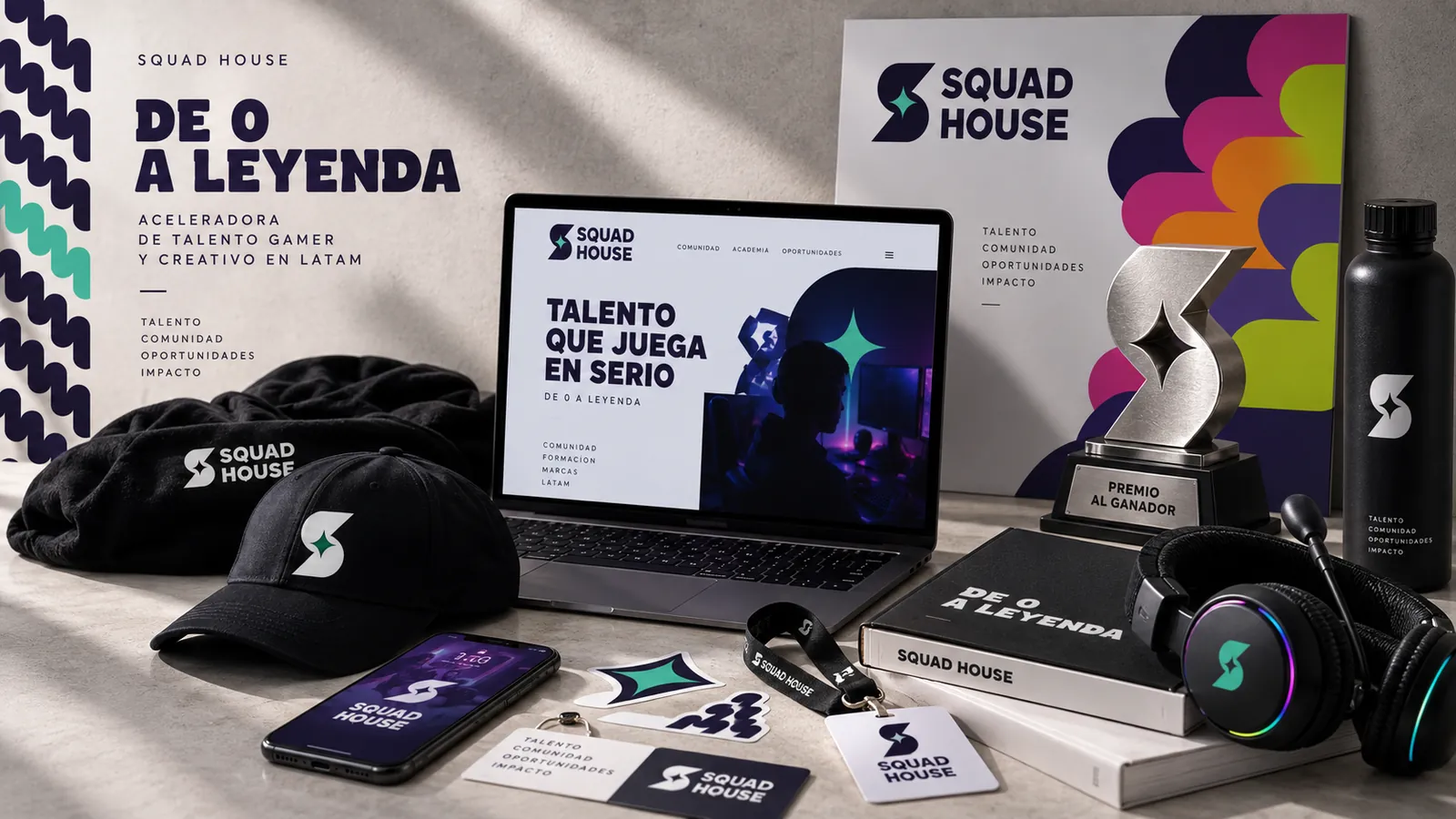
The Squad House was not conceived as a standalone course, but as a mission and progression path for creators: onboarding and a first mission, practical academy and training, recurring challenges and competitions, community and ongoing support, a digital creator kit, rewards and progress milestones, and access to real brand projects and opportunities.
The new structure allowed it to be considered not only as a community initiative, but as a potential business unit connecting creators, brands and the agency: Academy, Premium Membership, B2B Talent Pool, Representation & Deals, and Merch / Digital Products. The identity drew from gaming culture and squad systems — insignias, HUD references, digital codes and an eSports-inspired aesthetic — to make belonging, progress and ambition visible.
What changed?
This case is presented as a business, brand and experience transformation — not simply as a visual identity project. Business figures and KPIs were defined as objectives of the designed system. Achieved results were not documented.